
Spin a virtual dreidel and learn the real Hanukkah game rules Nun, Gimel, Hey, Shin. Google Dreidel is about as simple as a game gets: press spin, watch the dreidel twirl, and see which of four Hebrew letters it lands on. There’s no scoring built in and no opponent to beat – it’s a clean, satisfying little spinner themed around one of Hanukkah’s most beloved traditions. Pair it with the real gelt-betting rules below if you want to turn it into an actual game with friends or family. No downloads, no account required to start. Works in Chrome, Firefox, Edge, and on mobile.
What Is Google Dreidel?
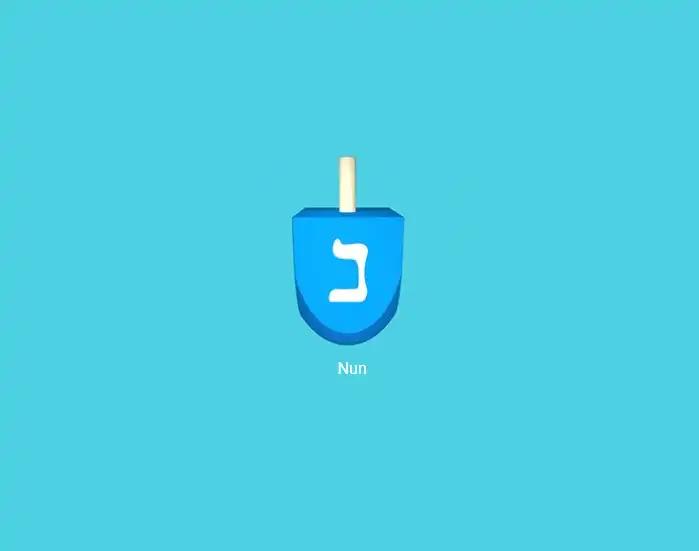
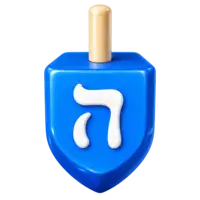
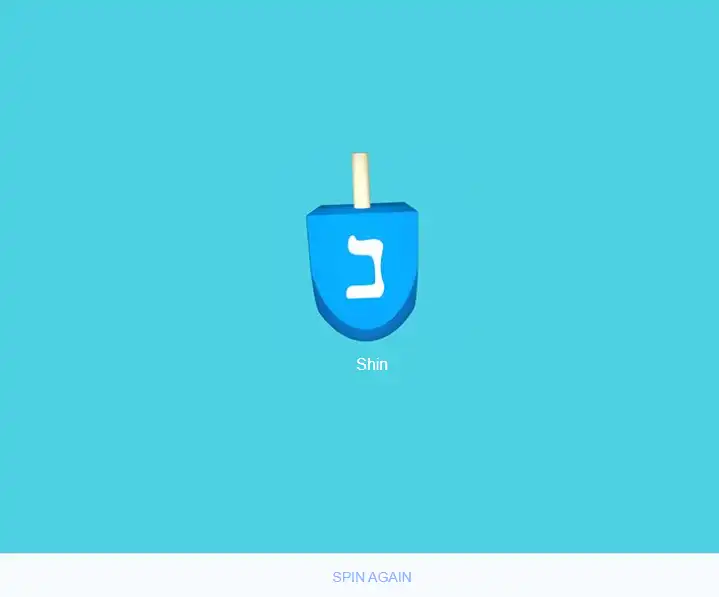
Google Dreidel is a simple, browser-based digital version of the traditional Hanukkah spinning top. Press the spin button, and the dreidel twirls through a short spinning animation before settling on one of four Hebrew letters – Nun, Gimel, He, or Shin – each landed on with equal, random odds. The result is displayed clearly both as the letter itself and its name, so you don’t need to already read Hebrew to know what you rolled.
On its own, this version is a pure spin-and-reveal tool rather than a full game with scoring or rounds – which actually makes it a great fit for playing the real traditional dreidel game alongside it, using your own tokens or gelt and the rules below to keep score by hand.
How to Play Google Dreidel
- Press Spin Again. The dreidel starts twirling immediately.
- Watch the spin animation. It plays for just over a second before slowing to a stop.
- See which letter it lands on. The dreidel settles on Nun, Gimel, He, or Shin, shown both visually and by name.
- Apply the traditional rules if you’re playing with others. Use real tokens – gelt, coins, or candy – alongside the spins to play the classic Hanukkah game (full rules below).
- Spin again whenever you’re ready for the next turn.
Controls
| Action | Input |
|---|---|
| Spin the dreidel | Click or Tap the “Spin Again” button |
That’s the entire interface – one button, one action. It’s intentionally this simple, which is exactly what makes it easy to use as a real-time prop while playing the traditional game with family or friends rather than something you need to learn.
What Do the Letters Mean?
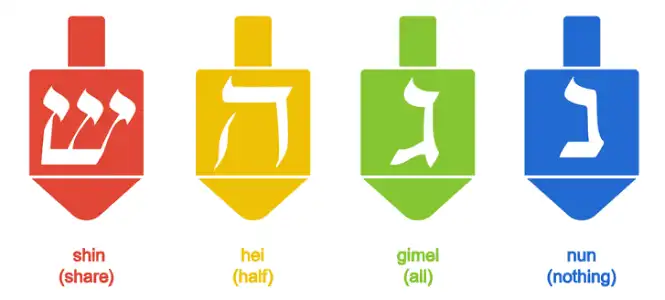
The four Hebrew letters on a dreidel – Nun (נ), Gimel (ג), Hey (ה), and Shin (ש) – form an acronym for the phrase “Nes Gadol Haya Sham,” meaning “A great miracle happened there,” referencing the Hanukkah story of the Maccabees’ victory and the oil that miraculously burned for eight nights instead of one. Dreidels made and sold in Israel traditionally swap the Shin for a Pey (פ) instead, changing the phrase to “Nes Gadol Haya Po” – “A great miracle happened here,” since Israel is where the actual events took place.
A deeper interpretation, attributed to the 18th-century Chassidic scholar Rabbi Tzvi Elimelech Shapiro, connects the four letters to four ancient kingdoms that historically tried and failed to destroy the Jewish people – including Nun representing Nebuchadnezzar of Babylon and Gimel representing Gog, associated with Greece.
The Real History of the Dreidel
The dreidel’s connection to Hanukkah carries a well-known folk explanation: that Jewish communities living under the rule of the Greek-Syrian king Antiochus, at a time when studying Torah was forbidden, would hide their scrolls and pretend to be playing an innocent spinning-top game whenever soldiers patrolled nearby. It’s a beloved story told at Hanukkah gatherings to this day.
The documented history tells a slightly different, equally interesting story. The four-sided spinning top itself – known historically as a “totum” or teetotum – predates its Hanukkah association by centuries. The earliest known written record of this kind of four-sided spinning top game comes from England around the year 1500, where it was popular among Irish and English children, especially around Christmastime, marked with Latin letters standing for simple gambling instructions (take all, take half, put in, nothing). Ashkenazi Jews in Eastern Europe adopted the same game sometime during the medieval period, swapping in the four Hebrew letters that sounded similar to the original ones, and layering the “Nes Gadol Haya Sham” meaning on top. This kind of transformation – taking an existing secular tradition and giving it new Jewish meaning – has precedent elsewhere in Jewish history too, similar to how elements of the Passover seder are believed to have been shaped by Roman banquet customs.
The word “dreidel” itself comes from the Yiddish “drei,” meaning “to turn.” In Hebrew, the same object is called a “sevivon,” from a root also meaning “to spin.”
How to Play the Traditional Dreidel Game
If you want to turn spins from this page into an actual game, here’s how the classic gelt-betting version works:
- Gather your group and tokens. Anything small works – chocolate gelt, pennies, nuts, raisins, or candy. Traditionally each player starts with 10 to 15 pieces.
- Divide tokens equally among all players before starting.
- Determine turn order. Everyone spins once; the highest letter goes first (Nun ranks highest, then Gimel, Hey, and Shin). Ties re-spin against each other.
- Ante up. At the start of each round, every player puts one token into the central pot.
- Take turns spinning in order (traditionally clockwise), applying the result based on which letter comes up:
| Letter | What Happens |
|---|---|
| Nun (נ) | Nothing happens – play passes to the next player. (Nun stands for the Yiddish word “nul,” meaning zero.) |
| Gimel (ג) | Take the entire pot! Every player, including the one who just spun, then adds one token back in to restart the pot. |
| Hey (ה) | Take half of the pot, rounded up to the nearest whole token if the pot has an odd number. |
| Shin (ש) / Pey (פ) | Add one of your own tokens into the pot. |
Play continues around the group, with everyone anteing again whenever the pot runs empty. The game traditionally ends whenever the group decides – when one player has collected everything, when someone runs out of tokens, or simply whenever everyone’s ready to stop.
Tips for Playing the Traditional Game
- Use chocolate gelt for an authentic feel. It’s the most traditional token and doubles as a treat once the game wraps up.
- Agree on the Hey rounding rule before you start. Whether an odd pot rounds up or down for a Hey spin is worth confirming with your group ahead of time to avoid disputes mid-game.
- Keep a side pot topped up. Since Gimel empties the pot completely, having everyone ante again immediately keeps the game moving without an awkward pause.
- Play with younger children using simplified rules if needed. Younger kids often enjoy just spinning and identifying the letters without the full betting mechanics – this digital version works well for that on its own.
- Set a house rule for how the game ends. Whether that’s one player collecting everything, a fixed number of rounds, or just “whenever the chocolate runs out,” deciding upfront keeps things fun rather than dragging on.
Other Doodle Games
- Google Snake Doodle
- Doodle Cricket
- Doodle Baseball
- Google Solitaire
- Google Block Breaker
- Google Minesweeper
- Google Tic-Tac-Toe
- Google Dreidel
- Popcorn Google Doodle
Frequently Asked Questions
What is Google Dreidel?
Google Dreidel is a simple digital spinner that lets you spin a virtual dreidel and see which of the four traditional Hebrew letters – Nun, Gimel, He, or Shin – it lands on, each with equal odds.
What do the letters on a dreidel mean?
Nun, Gimel, Hey, and Shin form an acronym for “Nes Gadol Haya Sham” – “A great miracle happened there” – referring to the Hanukkah story. In Israel, Shin is traditionally replaced with Pey, changing the phrase to “Nes Gadol Haya Po,” or “A great miracle happened here.”
Does this version keep score?
No. This is a pure spin-and-reveal tool. If you want to play the full traditional game with scoring, use real tokens alongside it and follow the classic gelt-betting rules (Nun does nothing, Gimel takes the whole pot, Hey takes half, Shin adds one token).
How do you play the traditional dreidel game?
Each player starts with an equal number of tokens. Every round, everyone antes one token into a central pot, then takes turns spinning. What happens depends on the letter: Nun does nothing, Gimel wins the whole pot, Hey wins half the pot, and Shin costs the spinner one token into the pot.
Is the dreidel really connected to hiding from Greek soldiers?
That’s a well-known and beloved folk explanation, though the documented history shows the four-sided spinning top game actually predates its Hanukkah association, having originated as a children’s gambling game in medieval Europe before being adopted by Ashkenazi Jewish communities and given Hebrew letters and new meaning.
What does “dreidel” mean?
It comes from the Yiddish word “drei,” meaning “to turn.” In Hebrew, the same object is called a “sevivon,” from a root also meaning “to spin.”
Which browser works best for Google Dreidel?
It runs well on any modern browser, including Chrome, Firefox, and Edge.
Can I play Google Dreidel on a phone or Chromebook?
Yes. It works in any modern browser, including on Chromebooks and mobile devices, with the spin button fully tap-friendly.
Why isn’t Google Dreidel loading?
Check your internet connection, make sure this site isn’t blocked on your network, and try disabling any ad blockers – these are the most common causes of loading issues.
Doodle Games